
Discovering squatters in your property is every landlord's nightmare. You've got mortgage payments to cover, insurance policies that could become void, and a legal minefield to navigate: all while unauthorized occupants are settling into your asset.
The good news? If you act immediately, the law does offer a fast-track route to reclaim your property. The bad news? That 48-hour window isn't as straightforward as it sounds, and one wrong move could delay the process by weeks or even months.
This guide breaks down exactly what UK landlords need to know about rapid squatter removal, the legal framework that makes it possible, and: crucially: how to prevent the situation from happening in the first place.
The 48-Hour Reality: Understanding Interim Possession Orders
When people talk about removing squatters in 48 hours, they're referring to an Interim Possession Order (IPO): the fastest legal route available to landlords in England and Wales.
Here's how it works:
An IPO can only be pursued if 28 days or fewer have passed since you discovered the squatters. This is a hard deadline. Miss it, and you'll need to follow the standard possession order route, which typically takes 10-15 working days minimum.

The IPO process follows a tight timeline:
- You apply to the court for the order (typically costs around £350 in court fees)
- Within 24 hours of the court issuing the order, you must serve the paperwork on the squatters
- The squatters have 24 hours to leave once they've been served
- If they don't leave, court bailiffs will enforce the eviction
In theory, this means you could go from discovery to empty property in as little as 48 hours: but only if the court processes your application immediately, you serve papers without delay, and the squatters comply or bailiffs are available instantly.
In practice, most IPO cases take 3-5 days from start to finish, which is still significantly faster than standard eviction procedures.
Your First 24 Hours: Critical Actions
The moment you discover squatters, the clock starts ticking. Here's what you need to do immediately:
Document Everything
Take photographs and videos of:
- The property exterior showing signs of occupation
- Any damage to doors, windows, or locks
- Evidence of forced entry
- Squatters themselves (if safe to do so from a public area)
This evidence will be essential for your IPO application and any potential criminal proceedings.
Establish the Timeline
You need to prove when you discovered the occupation. Document:
- The exact date and time you found the squatters
- How you discovered them (routine inspection, neighbor report, etc.)
- When you last confirmed the property was empty
Contact Legal Representation Immediately
While you can technically apply for an IPO yourself, solicitors experienced in property law can expedite the process significantly. They know the court procedures, can prepare paperwork quickly, and understand how to present your case effectively.
Notify Your Insurance Company
Many landlord insurance policies have specific notification requirements for squatter situations. Failure to inform them promptly could invalidate your cover for any damage.
Do NOT Attempt Self-Help
This cannot be stressed enough: you cannot use force, threats, or intimidation to remove squatters yourself. Doing so is illegal under Section 6 of the Criminal Law Act 1977 and could result in criminal charges against you, not them.
Special Circumstances: Displaced Residential Occupiers
You may have faster options if you fall into specific categories:
Displaced Residential Occupier (DRO): If you lived in the property immediately before the squatters entered, or you were in the process of moving in, you have additional rights. In some cases, you can re-enter the property without a court order, though this is a complex legal area requiring professional advice.
Protected Intending Occupier (PIO): If you own the property, haven't let it to anyone else, and need it as your residence, you may also have expedited options.
These designations carry specific legal definitions, so consultation with a property solicitor is essential before taking action.
Why Early Detection Changes Everything
The 28-day rule makes early detection absolutely critical. If squatters have been in your property for 29 days or more, your fastest legal option disappears.
This is where vacant property security becomes more than just a good idea: it's your first line of defense against occupation and your key to maintaining that crucial 28-day IPO eligibility.

Professional void property protection services provide:
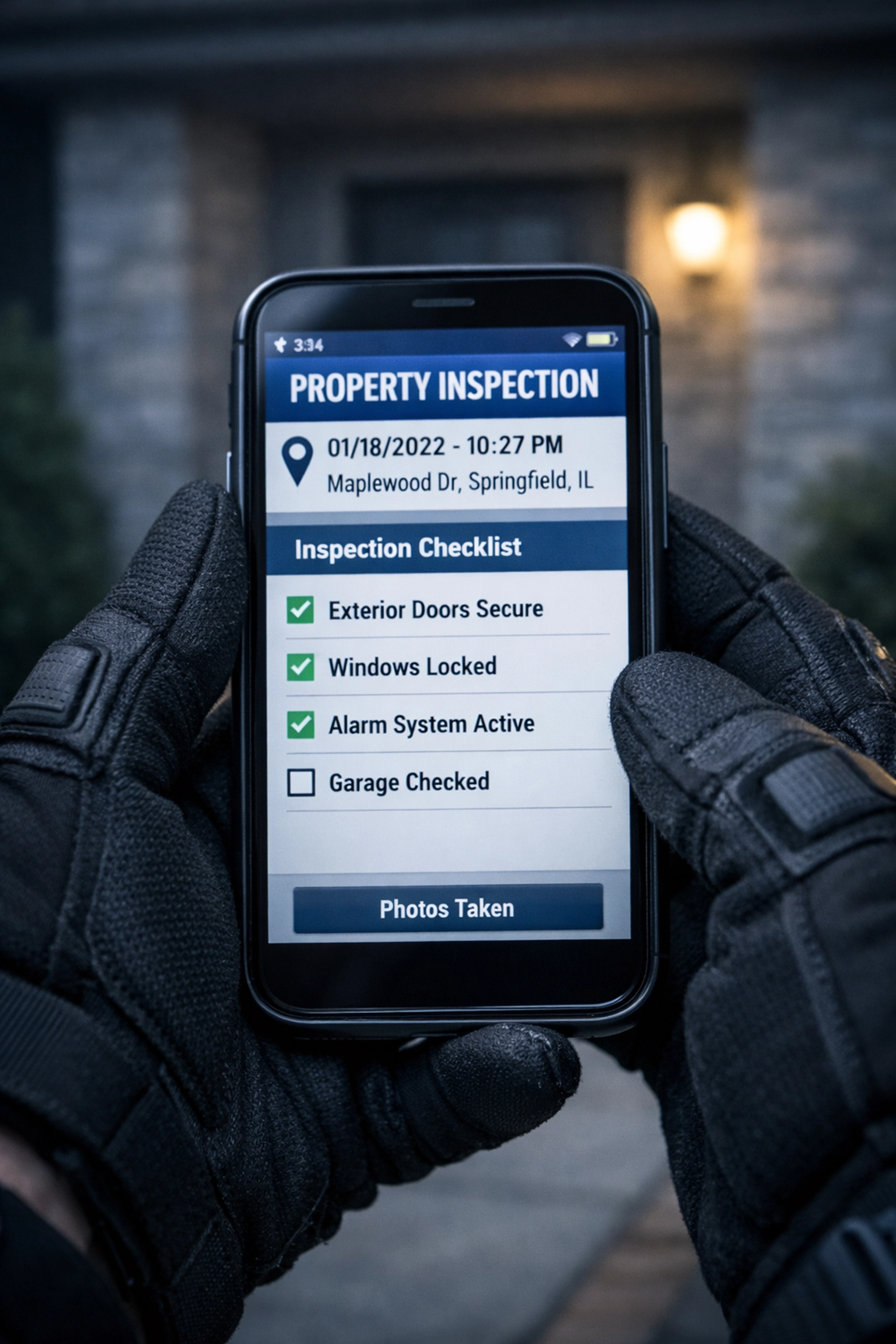
Regular Physical Inspections: Weekly or bi-weekly visits to check for signs of attempted access, damage, or occupation. These documented inspections create a paper trail showing when the property was last confirmed empty.
24/7 Monitoring: Some security services offer alarm systems and CCTV specifically designed for empty properties, providing immediate alerts if someone gains access.
Visible Deterrent: Security signage, regular patrols, and visible presence discourage opportunistic squatters from targeting your property in the first place.
Rapid Response: Professional security teams can attend your property within hours of an alert, documenting the situation and securing the premises while you pursue legal action.
At Srvwire Property Protection, our Void Property Protection services are specifically designed to prevent squatter situations and, if they do occur, to detect them within that critical 28-day window.
The Full IPO Process: What to Expect
Understanding the complete IPO process helps set realistic expectations:
Stage 1: Application (Day 1)
Your solicitor prepares and submits form N5 (Interim Possession Order application) to the county court with jurisdiction over your property. You'll need to provide:
- Evidence of your ownership
- Evidence the property was empty when squatters entered
- Proof you discovered the occupation within the last 28 days
- Details of the squatters (if known)
Stage 2: Court Order Issued (Day 1-2)
The court reviews your application without a hearing. If satisfied, they issue the IPO and schedule a full hearing (typically 7-14 days later).
Stage 3: Service of Papers (Day 2-3)
You must serve the IPO papers on the squatters within 24 hours of the order being issued. This usually involves:
- Hand delivery to the squatters at the property
- Affixing copies to the main entrance
- In some cases, using professional process servers
Stage 4: Squatter Departure (Day 3-4)
Squatters have 24 hours from service to vacate. If they refuse, they're committing a criminal offense punishable by up to six months in prison and/or a fine.
Stage 5: Bailiff Enforcement (Day 4-5)
If squatters remain after the deadline, court bailiffs enforce the eviction. Bailiff availability can sometimes cause delays, but they typically prioritize IPO cases.
Prevention: Your Best Strategy
The most effective way to handle squatters is to prevent them from entering in the first place. Empty properties are vulnerable properties, but several strategies dramatically reduce your risk:
Physical Security Measures
- Steel security doors and window covers
- Anti-climb paint on drainpipes and accessible areas
- High-quality locks on all access points
- Removal of potential entry aids (bins, ladders, furniture)
Visible Occupation Indicators
- Mail redirection services
- Light timers creating appearance of use
- Garden maintenance
- Regular litter removal
Professional Security Services
Manned Guarding provides the strongest deterrent, with security personnel physically present at your property. For most void properties, Mobile Patrols offer an excellent balance of protection and cost-effectiveness, with regular documented visits and rapid response capabilities.

Legal Preparedness
Keep immediately accessible:
- Proof of ownership documents
- Insurance policies with squatter cover
- Contact details for property solicitors
- Records of property inspections
- Utility account information
What Not to Do
These actions will delay your eviction and could land you in legal trouble:
❌ Cutting utilities: This is illegal and could be considered harassment
❌ Changing locks while squatters are inside: This constitutes illegal eviction
❌ Removing possessions: This is theft, regardless of property ownership
❌ Threatening or intimidating squatters: This is harassment and potentially assault
❌ Physical confrontation: This puts you at legal and personal risk
❌ Waiting to see if they leave: Every day reduces your legal options
Take Control of Your Property Security
Squatter situations are stressful, costly, and time-consuming: but they don't have to be inevitable. With proper vacant property security measures and rapid response protocols, you can either prevent occupation entirely or ensure it's detected within that critical 28-day window.
If you're managing empty properties in the West Midlands, Telford, Shrewsbury, or surrounding areas, professional void property protection isn't an expense: it's insurance against a potentially devastating situation.
Contact Srvwire Property Protection today for a consultation on securing your vacant properties. Our team provides comprehensive property protection services tailored to your specific situation, from mobile patrols to 24/7 manned guarding.
Don't wait until you discover squatters to think about security. By then, you're already fighting against the clock.
📞 Speak to our team: Get in touch to discuss your property protection needs and ensure you're never facing a 48-hour scramble to reclaim what's rightfully yours.
Leave a Reply